Infant & Toddler Motor Milestones: What to Expect From Birth to Walking

Updated: Aug 1
Watching your baby learn to move is one of the most exciting parts of early childhood. From the very first head lift during tummy time to those wobbly first independent steps, every movement milestone builds the foundation for future strength, coordination, confidence, and play.
As a pediatric physical therapist, one of the most common questions I hear from parents is:
“Is my baby developing normally?”
The good news is that there is a wide range of normal development. Babies learn skills at different speeds, and not every child follows the exact same timeline. However, understanding typical motor milestones can help parents know what to expect, how to support development at home, and when it may be helpful to seek extra support.
This guide walks through common infant and toddler motor milestones from birth through walking, along with simple activities you can try at home.
Quick AnswerMost babies begin sitting between 6-7 months. Most babies begin crawling between 7–10 months. Most babies begin walking between 12-15 months. |

Why Motor Milestones Matter
Motor milestones are movement skills that most babies develop within a general age range. These skills include:
Head control
Rolling
Sitting
Crawling
Pulling to stand
Walking
Each milestone builds on earlier movement patterns. For example:
Tummy time helps strengthen the neck and trunk
Rolling helps babies learn body awareness
Sitting develops balance and core control
Crawling strengthens both sides of the body together
Standing and cruising prepare babies for walking
Motor development also supports all other areas of development. Babies do not only learn to move. They also move to learn. As babies learn to move, they are learning about the world around them. Reaching, rolling, crawling, and walking give children opportunities to explore, problem-solve, interact with their environment, and build important cognitive skills. Movement is not just physical development. It is a major driver of learning, curiosity, confidence, and brain development during early childhood.
0–2 Months: Early Head Control & Movement
During the newborn stage, babies are beginning to adjust to life outside the womb. Their movements are often jerky and uncoordinated, but they are already starting to build important strength, coordination, and movement patterns.
Babies gradually begin developing midline head control, meaning they are better able to keep their head centered instead of always turned to one side. This early skill helps support visual tracking, hand-to-mouth play, symmetry, and later motor development.
Typical Skills
Most babies in this stage:
Lift their head briefly during tummy time
Move their arms and legs randomly
Begin turning toward sounds and voices
Start opening and closing their hands
What Parents May Notice
At this age, babies usually tolerate only short periods of tummy time before becoming tired. This is completely normal. The goal is not long tummy time sessions. Instead, it is frequent opportunities to practice.
Watch For
It may be helpful to speak with your pediatrician or a pediatric PT if your baby:
Seems very stiff or very floppy
Always keeps their head turned one direction
Strongly dislikes all tummy time
Rarely moves one arm or leg
Try This at Home
One of the easiest ways to encourage early strength is tummy time on your chest. Lay reclined on the couch or bed and place your baby tummy-down on your chest so they can look up at your face. This position often feels more comforting and manageable for young babies.
3–4 Months: Building Strength & Stability
By this stage, babies are becoming stronger, more alert, and increasingly interactive with the world around them. Their movements begin looking smoother and more purposeful as they gain better control of their head, trunk, and arms.
Many babies start reaching toward toys, batting at objects, bringing their hands together, and beginning to grasp items placed in their hands. They may spend more time looking at faces, tracking moving objects, and exploring toys with their eyes and hands.
These early movement and play skills help build strength, coordination, body awareness, and important cognitive skills like attention, curiosity, and cause-and-effect learning.
Typical Skills
Most babies begin:
Pushing up on their forearms during tummy time
Bringing hands together while lying on their back
Holding their head steadier
Looking around more during floor play

Why This Stage Matters
This is a major strengthening phase. Babies are learning to lift against gravity, shift weight, and activate their trunk muscles. These skills help prepare them for rolling and sitting later on.
Watch For
Consider reaching out for support if your baby:
Has very wobbly head control
Does not push up during tummy time
Strongly arches backward often
Keeps hands tightly fisted most of the time
Try This at Home
Babies often enjoy tummy time more when they can see themselves. Try placing a baby-safe mirror in front of them during floor play. You can also gently support under their chest with your hands or a small rolled towel.
Encourage reaching and grasping during play by placing lightweight toys within your baby’s visual field and slightly to the side so they are motivated to reach toward them. Soft rattles, crinkle toys, and easy-to-hold rings work well at this age. You can also gently help bring your baby’s hands to toys placed at midline to encourage two-handed play and hand exploration.
5–6 Months: Rolling & Beginning Sitting
Around this age, many babies become more mobile. Rolling is often one of the first major movement milestones because it allows babies to independently move through short distances their environment.
Many babies begin showing more interest in sitting and spending time upright so they can better see and interact with their environment. At first, they may need support at their trunk or may prop forward on their arms in a “tripod sitting” position to help with balance. As their core strength, balance, and postural control improve, babies gradually become more stable and confident sitting with less support.
Typical Skills
Many babies begin:
Rolling in both directions
Sitting with support
Reaching for toys while on their tummy
Bringing feet to hands
Why Rolling Is Important
Rolling helps babies:
Develop trunk rotation
Strengthen both sides of the body
Learn how to shift weight
Build body awareness
These are important building blocks for crawling later on.
Watch For
You may want additional guidance if your baby:
Is very stiff or frequently arches backward
Is not attempting to roll
Strongly dislikes floor play
Always moves to only one side
Try This at Home
Encourage rolling during play by:
Placing toys slightly to the side
Helping your baby roll slowly on a soft surface
Practicing side-lying play positions
Floor time is one of the best ways to help babies naturally build movement skills.
7–8 Months: Independent Sitting & Early Mobility
At this stage, babies are becoming more interested in exploring. Many babies can now sit independently with much better balance and trunk control. They are typically able to use both hands to reach for, transfer, shake, and explore toys while maintaining their sitting balance.
As babies become more mobile and curious about their environment, they often begin preferring tummy play and may no longer enjoy spending much time lying on their back. During floor play, many babies also begin pivoting in circles on their tummy, pushing backward, or starting to move forward with belly scooting or early army crawling movements as they work toward greater mobility and independence.

Typical Skills
Babies in this age range often:
Sit independently
Reach outside their base of support while sitting
Pivot on their tummy
Begin scooting, army crawling, or attempting forward movement
Important Reminder
Not all babies crawl the same way. Some babies:
Army crawl
Scoot on their bottom
Crawl backward first
Transition directly into hands-and-knees crawling later
Variation can be completely normal.
Watch For
Consider an evaluation if your baby:
Cannot sit independently
Makes no attempt to move on the floor
Does not bear weight through the legs
Strongly favors one side
Try This at Home
Place favorite toys slightly out of reach during floor play. This encourages babies to:
Shift weight
Reach
Rotate
Problem-solve movement
Avoid always placing toys directly into their hands.
9–10 Months: Crawling, Pulling to Stand & Cruising
This is often an exciting stage because babies become much more independent. Many babies are becoming very mobile and are eager to explore their environment. They may crawl or scoot from room to room, follow caregivers around the house, and actively seek out toys and new experiences.
As their strength and confidence grow, many babies also begin showing strong interest in standing. They often start pulling themselves up using furniture or other stable surfaces and may practice standing while holding on for support. Over time, many babies begin taking sideways steps while holding onto furniture, a skill known as cruising, which helps prepare them for independent walking later on.

Typical Skills
Many babies now:
Crawl on hands and knees
Pull to stand at furniture
Cruise sideways along furniture
Transition between sitting and crawling independently
Why Crawling MattersIndependent floor mobility plays an important role in much more than just physical development. As babies begin moving independently through their environment, they gain new opportunities to explore, problem-solve, make choices, and interact with the people and objects around them. Mobility helps support cognitive development by encouraging curiosity, spatial awareness, memory, and cause-and-effect learning. It also strengthens social development, as babies are better able to seek out caregivers, initiate interaction, participate in play, and engage more actively with their environment Crawling also helps develop:
|
Watch For
You may want to seek support if your baby:
Is not moving across the floor at all
Has very poor sitting balance
Strongly toe-stands on tiptoes constantly
Avoids bearing weight through the legs
Try This at Home
A fun activity at this stage is climbing over couch cushions placed safely on the floor. This helps babies practice:
Weight shifting
Strength
Balance
Motor planning
Always supervise closely.
11–12 Months: Standing & Early Steps
As babies approach their first birthday, many begin experimenting with independent standing and early walking as their balance, leg strength, and confidence continue to improve. During this stage, babies often spend more time cruising along furniture, transitioning between surfaces, and briefly letting go while standing. Some babies may begin taking a few independent steps, while others still prefer crawling as their primary way of moving.
This stage is often filled with excitement, curiosity, and frequent practice. Babies are learning how to shift their weight, maintain balance, recover from falls, and move safely through their environment. As mobility increases, they are also becoming more socially engaged and independent, often wanting to follow caregivers from room to room and participate more actively in everyday activities.
Typical Skills
Many babies now:
Stand briefly without support
Walk with hands held
Lower themselves to the floor with more control
Cruise confidently along furniture
Important Reminder
There is a wide range of normal for walking. Some babies walk at 10 months. Others may not walk independently until 16 months. Both can still fall within normal development.
Watch For
You may want to discuss concerns if your baby:
Is not pulling to stand
Stands mostly on tiptoes
Seems very stiff
Avoids weight-bearing through the legs
Try This at Home
Practice climbing with close supervision. For example:
Climbing over couch cushions
Practicing safe stair climbing with hands-on help
Cruising between nearby furniture surfaces
These activities build leg strength and balance.
13–15 Months: Independent Walking
Toddler mobility grows quickly once walking begins. Early walking is often stiff, wide-based, and uncoordinated as toddlers learn how to balance, shift their weight, and control their movements while upright. Many new walkers keep their arms lifted in a “high guard” position for stability, take short quick steps, and fall frequently throughout the day. While these falls can feel nerve-wracking for parents, they are an important part of the learning process. Safe falls help toddlers develop balance reactions, body awareness, coordination, and problem-solving skills as they learn how to move through their environment more confidently.
Over the next four to six weeks, walking patterns often begin looking noticeably smoother and more mature. Toddlers typically develop better balance, improved trunk rotation, a narrower walking pattern, and a more natural arm swing as they gain confidence and practice. As their mobility expands, many toddlers also begin exploring more challenging community environments such as grass, uneven sidewalks, small slopes, playground surfaces, and curbs. These experiences help strengthen balance, coordination, motor planning, and adaptability while giving toddlers important opportunities to safely explore the world around them.
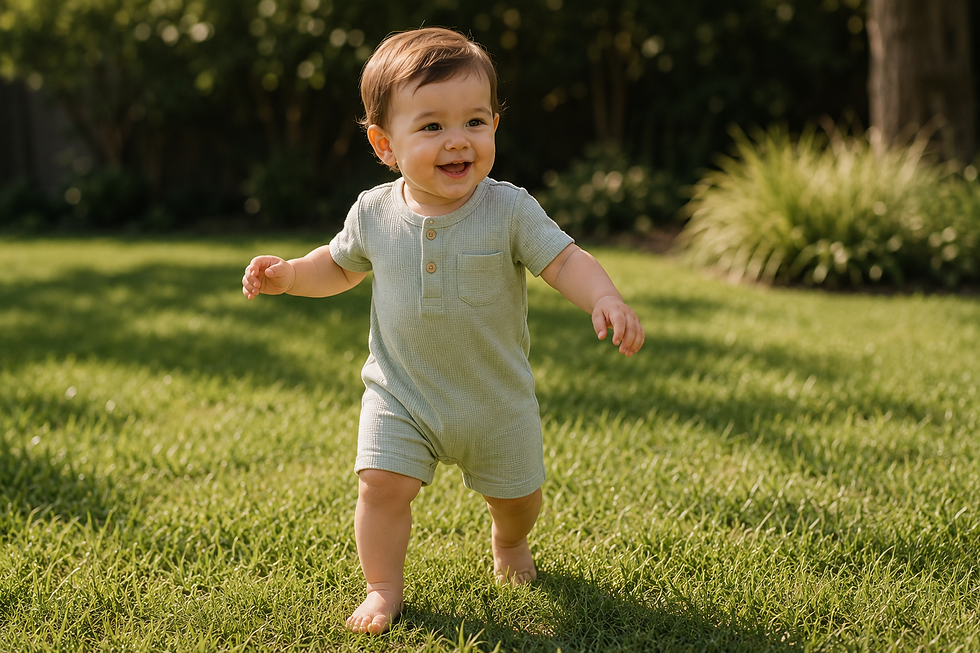
Typical Skills
Most toddlers in this stage:
Walk independently
Squat to pick up toys
Climb onto furniture
Begin attempting faster walking or early running
What Walking May Look Like
Early walking is often:
Wide-based
Wobbly
Fast-paced
Unsteady
Watch For
It may be helpful to seek support if your toddler:
Is not taking independent steps
Walks primarily on tiptoes
Frequently loses balance far more than expected
Shows strong asymmetry during movement
Try This at Home
Encourage movement through play. Toddlers build motor skills best when movement is fun and natural. Ideas include:
Push toy walking
Climbing at the playground
Cruising along walls or furniture
Carrying lightweight toys while walking
When Should Parents Talk to a Pediatric Physical Therapist?
Every child develops differently, but certain delays or movement patterns may benefit from professional guidance. Consider speaking with a pediatric physical therapist if your child is:
Not rolling by 7 months
Not sitting independently by 9 months
Not crawling or moving across the floor by 11 months
Not walking by 16 months
You may also want support if you notice:
Significant stiffness or floppiness
Strong side preference
Persistent toe walking
Flat head shape with movement preference
Frequent frustration during floor play
Early intervention can make a tremendous difference. Often, small adjustments to positioning, play, and strengthening activities can help babies become more comfortable and confident movers.
Frequently Asked Questions
Is it normal for babies to develop at different rates?
Yes. There is a wide range of typical development. Some babies reach milestones earlier and others later.
Should I worry if my baby skips crawling?
Some babies do skip traditional crawling, but crawling offers many developmental benefits. If your baby is not attempting any type of floor mobility, it may be worth discussing with a pediatric PT.
How much tummy time should babies get?
Short, frequent tummy time sessions throughout the day are often most successful, especially for newborns.
What age should babies walk?
Most babies begin walking between 12-15 months. Walking by 16 months is generally considered within the typical developmental range.
When should I seek an evaluation?
If your child is missing multiple milestones, strongly favors one side, seems unusually stiff or floppy, or if you simply feel concerned, an evaluation can provide reassurance and support.
The Bottom Line
Parents do not need fancy equipment to help babies develop movement skills. In fact, some of the best developmental opportunities come from simple floor play.
Focus on Floor Time
Babies learn best when they have opportunities to:
Move freely
Explore
Practice transitions
Strengthen naturally through play
Limit Time in Containers
Swings, bouncers, seats, and walkers can be helpful in moderation, but too much container time may reduce opportunities for active movement.
Follow Your Baby’s Lead
Keep activities playful and interactive. Short, frequent opportunities are often more effective than long practice sessions.
Make Movement Fun
Babies and toddlers learn through connection and play. Simple games, songs, mirrors, toys, and interaction with caregivers all help support development.
Final Thoughts
Watching your child learn to move is an incredible journey. Remember:
Development is not a race
There is a wide range of normal
Small variations are common
Floor play is one of the best tools for development
Most importantly, trust your instincts. If something feels concerning, seeking guidance early can provide reassurance, support, and practical strategies tailored to your child.
Free Parent Resource
If you want to better understand infant motor milestones, you can download my Infant & Toddler Motor Milestone Guide.
Inside you'll learn:
✔ what motor skills typically develop each month
✔ signs your baby may need extra support
✔ simple activities you can try at home
Download the guide here.
About the Author
Cyndi Stedman, PT, DPT is a pediatric physical therapist with over 17 years of experience supporting infants and toddlers. Through Early Intervention and home-based therapy, she has helped more than 1,000 families support their child’s development. Her goal is to give parents clear, practical guidance so they feel confident helping their child learn to move and grow.


Comments