Primitive Reflexes in Babies and Young Children: What Parents Should Know

As parents, we spend a lot of time watching our children learn to move.
We notice when they first hold their head up, roll, sit, crawl, pull to stand, and take those first wobbly steps. But underneath all of those visible milestones, the nervous system is doing an incredible amount of work that we can't see.
One part of that early development involves primitive reflexes.
Primitive reflexes are automatic movement responses that babies are born with. They play an important role early in life, but most are designed to gradually become less dominant as a baby's brain and nervous system mature.[1-4]
Sometimes, however, elements of these reflexes remain more active than expected.
When that happens, the signs aren't always obvious. A toddler isn't necessarily walking around displaying a textbook newborn reflex. Instead, you might notice subtle things: awkwardness in certain positions, difficulty coordinating the two sides of the body, frequent falls, unusual posture, avoiding certain movements, or simply seeming to work harder than other children to accomplish the same physical task.
Let's talk about what primitive reflexes are, what it means for them to "integrate," and why pediatric physical and occupational therapists sometimes look at them when evaluating a child's development.

What Are Primitive Reflexes?
Primitive reflexes are automatic movement patterns controlled primarily by lower levels of the developing nervous system.[1,2]
Babies don't have to think about these movements.
For example, when a newborn's head turns to one side, their arms and legs may automatically move into a particular position. When a young baby's head changes position relative to gravity, muscle activity throughout the body can change automatically.
These reflexes aren't bad. In fact, they are a normal and important part of early development.[1-4]
Think of them as some of the nervous system's earliest movement programs.
During infancy, these automatic responses help a baby interact with gravity, movement, touch, and changes in position while more sophisticated areas of the brain are developing.
As the nervous system matures and babies gain experience moving their bodies, voluntary movement gradually becomes more dominant.[1,2]
The reflex hasn't necessarily been "erased." Instead, the nervous system becomes better able to inhibit or override the automatic response when it isn't useful.
That's what therapists generally mean when they talk about a primitive reflex becoming integrated.
The "Lower Brain" and "Higher Brain": A Simple Way to Think About It
One simple way to understand this process is to think about movement gradually shifting from automatic to more intentional and adaptable. This is only a teaching tool. Different parts of the brain are not literally fighting for control, and a retained reflex does not automatically explain any one behavior.
I sometimes explain this to parents as a conversation between the lower and higher parts of the nervous system.
Early in infancy, the lower, more automatic parts of the nervous system have a lot of influence over movement.
That's exactly what we want in a newborn.
But as the brain matures, higher levels of the nervous system gain more control. A child becomes increasingly able to choose a movement rather than simply responding automatically to a particular position or sensation.
Imagine a toddler turning their head while crawling.
Their goal might be:
"I want to look at Mom while I keep crawling toward that toy."
Their more mature nervous system needs to coordinate that movement: turn the head, maintain balance through the trunk, keep weight through the arms and legs, and continue moving forward.
If an automatic reflexive response is still strongly triggered by the head movement, the nervous system may have another movement pattern trying to occur at the same time.
In very simplified terms, the child's voluntary movement and the automatic response may compete with one another.
The child can often still accomplish the task. They may simply have to work harder to do it.
And that's one reason retained primitive reflexes can be easy to miss.
Primitive Reflexes I Commonly Think About in Young Children
There are many primitive reflexes, but when we're thinking about gross motor development in babies, toddlers, and preschoolers, there are a few that are particularly helpful to understand.
Asymmetrical Tonic Neck Reflex (ATNR)

ATNR is sometimes called the "fencing reflex."
When a young baby's head turns toward one side, the arm and leg on that side tend to straighten while the opposite arm and leg tend to bend.[1,2]
This is completely normal in early infancy.
ATNR is generally expected to become much less influential during the first several months of life as babies develop better midline control, begin bringing their hands together, rolling, reaching across their bodies, and eventually coordinating the two sides of the body. Published windows vary by examination method, with many clinical sources placing substantial inhibition within roughly the first 4 to 6 months and some describing a wider range.[1,2]
When ATNR remains more active than expected
A child with a strongly retained ATNR isn't necessarily going to assume a dramatic fencing position every time they turn their head.
Instead, you might notice more subtle difficulties with things such as:
Coordinating the right and left sides of the body
Crossing the middle of the body during play
Crawling with a smooth reciprocal pattern
Maintaining stability while turning the head
Catching or throwing a ball
Using both hands together during play
Maintaining posture while looking from side to side
A child may compensate so effectively that the underlying difficulty isn't obvious.
Sometimes what parents notice instead is simply:
"My child seems awkward." or "They can do it, but it looks harder than it should."
Symmetrical Tonic Neck Reflex (STNR)
STNR appears later than ATNR and is closely related to movements of the head, arms, and legs.
Very simply, changes in head position can influence whether the arms and legs want to bend or straighten.[2]
The STNR connects the position of a baby’s head with movements of their arms and legs:
When the head looks down: The arms naturally want to bend, while the legs want to straighten.
When the head looks up: The arms naturally want to straighten, while the legs want to bend.
This reflex is especially noticeable when babies are on their hands and knees. It helps them begin separating the movements of their upper and lower body as they prepare for crawling.
STNR typically emerges during later infancy and becomes less dominant as babies develop better control in hands-and-knees positions and begin crawling. Commonly cited clinical ranges describe emergence around 6 to 9 months and integration around 9 to 11 months.[2,5]
This makes STNR particularly interesting when we look at a baby's transition into four-point crawling.
When STNR remains more active than expected
You may see difficulty separating what the upper body is doing from what the lower body is doing.
For example, a child may have difficulty:
Maintaining a stable hands-and-knees position
Crawling smoothly on hands and knees
Moving the arms and legs independently
Transitioning between the floor and standing
Maintaining an upright seated posture
Keeping the trunk stable while moving the head
Coordinating more complex whole-body movements
In an older toddler or preschooler, you might see frequent position changes or unusual sitting postures because maintaining a traditional upright sitting position requires more effort.
Again, these children often can perform the activity.
The question is how efficiently and comfortably their nervous system allows them to do it.
Tonic Labyrinthine Reflex (TLR)
The Tonic Labyrinthine Reflex, or TLR, is closely connected with the body's relationship to gravity and head position.
In early infancy, changing the position of the head relative to gravity can influence muscle activity throughout the body.[1,5]
There are two ways the TLR can affect the body:
When the head moves forward: The baby’s body naturally wants to curl forward, with the arms and legs bending toward the body.
When the head moves backward: The baby’s body naturally wants to straighten and extend, with the arms and legs becoming straighter.
Over time, children develop increasingly sophisticated postural reactions that allow them to move their head independently while their body automatically makes tiny adjustments to keep them balanced.
That's part of what allows a toddler to look up at an airplane without falling backward or bend down to pick up a toy and then stand again without losing balance.
When TLR remains more influential than expected
A child may have more difficulty with:
Balance
Postural control
Moving against gravity
Adjusting their body when their head changes position
Maintaining an upright posture
Coordinating movements that require bending and straightening
Moving confidently through different positions
You might notice that your child seems particularly uncomfortable with movements that change where their head is in space.
Or you may simply notice that balance seems harder than expected.
Moro Reflex
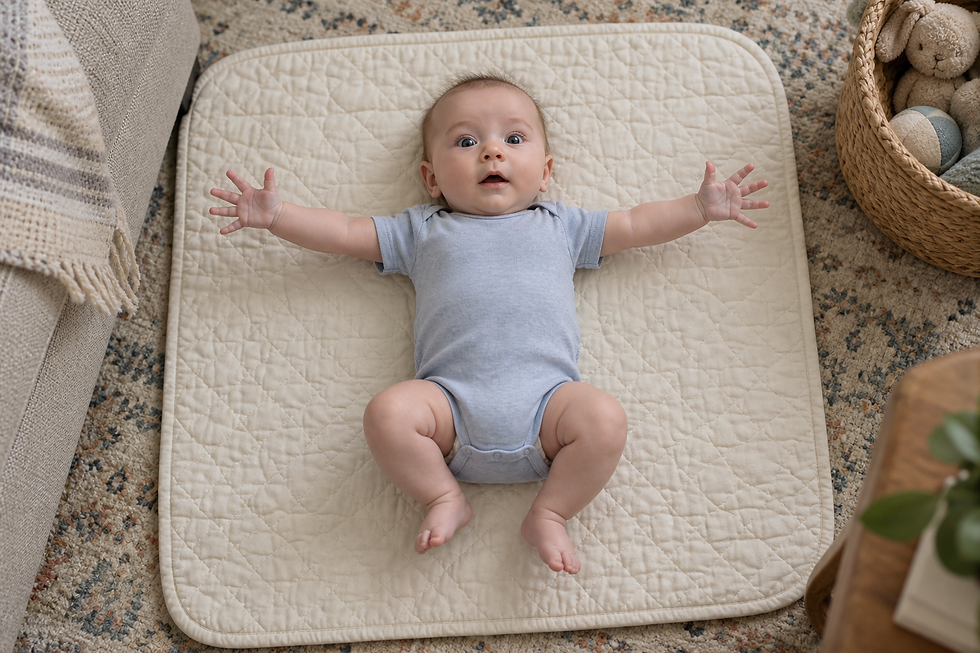
Most parents have actually seen the Moro reflex without knowing its name.
It's the dramatic startle response you often see in newborns: the arms suddenly move outward and then come back toward the body.[3,4]
The Moro reflex is expected in newborns and normally becomes much less prominent within the first several months of life, with clinical sources generally expecting disappearance by about 6 months.[3,4]
In older children, therapists may consider whether an unusually strong response to unexpected movement or changes in position is part of a larger developmental picture.
This is especially important to evaluate carefully because being cautious about movement, disliking certain positions, or becoming overwhelmed by sensory experiences can have many different explanations.
A retained reflex should never be assumed to be the cause based on one behavior alone.
What About the Palmar Grasp and Spinal Galant Reflexes?
There are several additional primitive reflexes that pediatric therapists may consider.
The palmar grasp reflex, for example, causes a young baby's fingers to automatically close around something placed in the palm. As voluntary hand control develops, this reflex becomes less dominant.[1,4]
Because persistent grasp responses can affect hand use, this is an area where an occupational therapist may be particularly helpful. Occupational therapists specialize in the fine-motor, sensory, and functional skills children use for play, dressing, feeding, drawing, and eventually writing.
The spinal Galant reflex is another early reflex involving movement in response to stimulation along the side of the spine. A therapist may assess it as part of a broader neurological or developmental examination when appropriate.[1]
For most parents, though, memorizing every primitive reflex isn't necessary.
What's much more useful is understanding how your child moves and functions.
When Are Primitive Reflexes Supposed to Go Away?
There isn't one birthday when every primitive reflex suddenly disappears.
Integration is a developmental process.
Approximate timelines commonly described include:
Moro: usually becomes much less prominent by approximately 4 to 6 months.[3,4]
ATNR: strongest during early infancy and typically becomes substantially inhibited during the first 4 to 6 months, although exact timelines vary depending on how it is measured and some references describe a wider range.[1,2]
STNR: emerges later, commonly around 6 to 9 months, and typically becomes integrated around the end of the first year.[2,5]
TLR: develops during infancy and gradually becomes less dominant as postural control matures. Different components of the TLR may follow different developmental timelines, and published sources do not use one uniform cutoff.[1,5]
These ages should be viewed as developmental ranges rather than pass/fail deadlines.
And this is particularly important:
A therapist detecting a small reflexive response in an older child does not automatically mean something is wrong.
Research has found low-level residual primitive-reflex activity even among otherwise typically developing preschool-aged children.[5,6]
The clinical question isn't simply:
"Is the reflex there?"
It's:
"How strongly is it influencing this child's movement and function?"
What Does a Retained Primitive Reflex Actually Look Like?
This is where primitive reflexes become especially interesting clinically.
A child doesn't necessarily look "reflexive."
Instead, you may see the compensations the child has developed around the reflex.
For example, a child might:
Fall more often than expected
Avoid climbing or playground equipment
Struggle with balance when looking up or down
Have difficulty coordinating both sides of the body
Avoid crossing the body's midline
Use unusual strategies when crawling, climbing, or getting off the floor
Frequently lean on furniture or other people
Sit in unusual positions to create additional stability
Have difficulty maintaining upright posture
Look stiff or awkward during certain movements
Need more effort to learn new gross-motor skills
Become frustrated with physical activities
Prefer activities that feel predictable and physically safe

None of these behaviors proves that a child has a retained primitive reflex.
That's important.
Low muscle tone, weakness, joint flexibility, sensory differences, vision, motor-planning challenges, orthopedic differences, neurological conditions, limited movement experience, and normal developmental variation can create very similar movement patterns.
That's why reflexes should be considered as one piece of a much larger developmental picture. Clinical and professional guidance supports comprehensive neuromotor assessment rather than interpreting a primitive-reflex finding in isolation.[1,8,9]
Sometimes the Child Can Do the Skill, But It Costs Them More
This is one of the most important concepts for parents to understand. Development isn't only about whether a child can perform a skill. We also look at how they perform it.
Two children may both be able to climb a playground ladder. One child climbs automatically while talking to a friend and looking around the playground. The other child may need to concentrate intensely on where every hand and foot goes. Both children technically "can climb."
But those experiences are very different.
When a child's nervous system is constantly compensating for difficulties with postural control, coordination, balance, or automatic movement responses, physical activity can require more effort.
Over time, that can affect more than motor skills.
It can affect how a child feels about moving.
Evidence note: Studies in preschool-aged children report associations between greater residual reflex activity and lower motor performance, especially balance, coordination, and locomotor tasks.[5-7] These studies support looking more closely at function. They do not establish that a retained reflex is the sole cause of a child's difficulty.
Primitive Reflexes, Movement and Confidence
Young children learn about themselves through movement.
Every time a toddler climbs onto the couch, walks across uneven grass, runs after another child, steps over a curb, or climbs onto playground equipment, their brain is gathering information:
"I know where my body is."
"I can figure this out."
"I can catch myself if I lose my balance."
"My body can do this."
That builds confidence.

But imagine if movement frequently feels unpredictable.
If turning your head affects your balance.
If coordinating your arms and legs takes extra concentration.
If you fall more frequently.
If playground equipment feels overwhelming.
A child may begin avoiding those experiences.
Not because they're lazy.
Not because they aren't interested.
And not necessarily because they're afraid in the way an adult thinks about fear.
Their nervous system may simply have learned:
"This movement doesn't feel very secure."
As pediatric therapists, that's something we pay attention to.
Sometimes building motor skills isn't only about achieving another milestone.
It's about helping a child develop comfort and confidence in their own body.
Clinical explanatory analogy: The statements about what a child may feel or learn through movement are clinical illustrations. Confidence, avoidance, and discomfort are influenced by many personal and environmental factors and should not be attributed to a retained reflex without individualized assessment.
What About Fine Motor Skills?
Primitive reflexes can also intersect with skills involving the hands, eyes, and upper body.
For example, efficient fine-motor development requires a child to maintain a stable trunk and shoulders while allowing the hands to perform increasingly precise movements.
Children also need to coordinate both hands, cross the body's midline, visually track objects, and eventually separate head, eye, arm, and hand movements from one another.
Those abilities become increasingly important for activities such as:
Building with blocks
Using utensils
Turning pages
Stringing beads
Drawing
Using scissors
Dressing
Completing puzzles
Because fine-motor development and sensory processing fall more specifically within the expertise of occupational therapy, concerns in these areas are often best evaluated by a pediatric occupational therapist.
PT and OT frequently overlap, however, because a stable, well-organized body creates the foundation for what the hands need to do.
Should Parents Try Primitive Reflex Integration Exercises at Home?
This is one area where I would not recommend choosing exercises from a social media video or online checklist and beginning a "reflex integration program" on your own.
There are two reasons.
First, seeing one behavior associated with a retained reflex doesn't tell us why your child is doing it.
A child who struggles to maintain hands-and-knees could have weakness, low muscle tone, joint instability, motor-planning difficulties, discomfort, limited experience in that position, a retained reflex, or some combination of several factors.
The appropriate treatment depends on what is actually happening.
Second, primitive reflex assessment requires looking at the child's responses carefully and interpreting them in the context of their age, development, strength, muscle tone, balance, coordination, sensory processing, and overall movement patterns.[1,8,9]
There also isn't strong enough evidence to assume that every child with a detectable primitive reflex needs a specific stand-alone "reflex integration" exercise program. A 2026 systematic review found promising signals but judged the intervention evidence limited and heterogeneous. AOTA advises against reflex-integration programs without a clear link to occupational outcomes and recommends focusing intervention on participation and performance.[7,8]
That's why this is different from something like giving parents ideas for tummy time or helping a baby practice reaching.
This is an area where evaluation matters.
When Should I Ask a PT or OT About Primitive Reflexes?
You don't need to request a primitive-reflex evaluation simply because your child occasionally sits strangely, trips, dislikes a swing, or struggles with one motor skill.
But it may be worth a closer look when you notice a pattern.
Consider talking with a pediatric physical or occupational therapist if your child consistently:
Seems unusually awkward or poorly coordinated
Falls significantly more than peers
Has difficulty using both sides of the body together
Avoids crossing the middle of the body
Struggles with crawling or other reciprocal movements
Has difficulty maintaining posture
Seems uncomfortable with certain movements or changes in head position
Avoids age-appropriate playground or movement activities
Uses unusual movement strategies repeatedly
Has motor difficulties that don't seem fully explained by strength alone
Appears to work much harder than expected to perform everyday movement tasks
A pediatric PT can look at the whole child rather than testing one reflex in isolation.
That includes strength, muscle tone, joint mobility, posture, balance, coordination, gross-motor skills, movement quality, motor planning, symmetry, and the child's response to movement.
A pediatric OT can provide additional expertise when concerns involve fine-motor skills, sensory processing, self-care, visual-motor skills, or other daily activities.
A Retained Reflex Is Not a Diagnosis
This may be the most important takeaway from this entire article.
Primitive reflexes are one part of neurological and motor development.
Finding evidence of a retained reflex does not automatically mean your child has a neurological disorder, developmental disorder, learning disability, or sensory-processing problem.
In fact, research has identified low levels of residual primitive-reflex activity in many healthy preschool-aged children.[5,6]
What matters is the entire clinical picture.
Is the response strong?
Does it consistently appear?
Is the child compensating for it?
Is it affecting movement?
Are there other developmental concerns?
And most importantly:
Is it interfering with what the child wants or needs to do?
Those questions tell us far more than simply checking a box that says a reflex is "present" or "absent."
Key Takeaways
Primitive reflexes are normal automatic movement responses that help support development early in infancy.[1-4]
As the nervous system matures, higher levels of the brain gain greater control over movement, allowing these automatic responses to become less dominant.[1,2]
ATNR, STNR, TLR, and Moro are several reflexes that may be considered when evaluating the movement and postural control of young children.[1-5]
When primitive reflex activity remains stronger than expected, the signs can be surprisingly subtle. A child may still accomplish gross-motor skills but require additional effort or develop compensatory movement strategies.
Retained primitive reflexes are not a diagnosis, and one unusual movement does not mean a child has a reflex-integration problem.
The most useful question isn't simply whether a primitive reflex can be detected.
It's whether that reflex appears to be meaningfully interfering with the child's movement, comfort, confidence, or participation.
And that's a question best answered by looking at the whole child.
Frequently Asked Questions
Can a child have a retained primitive reflex and still meet all their milestones?
Yes. Milestones tell us what a child can do, but they don't always tell us how the child is doing it. Some children develop effective compensations and reach expected milestones while still demonstrating difficulties with coordination, balance, posture, or movement efficiency.
Does a retained primitive reflex mean something is wrong with my child's brain?
Not necessarily. Small amounts of residual reflex activity have been identified even in typically developing preschool-aged children.[5,6] Reflex findings need to be interpreted alongside the child's complete developmental and neurological picture.
Can retained primitive reflexes cause clumsiness?
Retained reflex activity has been associated with lower motor performance in preschool-aged children, but an association does not prove causation.[5-7] Clumsiness can have many causes. Strength, muscle tone, coordination, vision, sensory processing, attention, motor planning, joint mobility, and other factors can all influence how coordinated a child appears.
Can primitive reflexes affect crawling?
They can influence the coordination and postural control required for hands-and-knees crawling. ATNR and STNR are particularly relevant when therapists evaluate how a baby coordinates the arms, legs, head, and trunk during reciprocal movement.[1,2]
Can primitive reflexes affect handwriting?
Potentially, primitive reflex activity may coexist with difficulties involving posture, bilateral coordination, visual-motor skills, or hand use. However, handwriting difficulties have many possible causes. For a toddler or preschooler with fine-motor concerns, a pediatric occupational therapist is the appropriate professional to provide a more detailed assessment.
Should I do reflex integration exercises I find online?
I don't recommend choosing exercises based solely on an online checklist or video. If you're concerned about your child's movement, the first step should be figuring out why the difficulty is happening. A pediatric PT or OT can determine whether primitive reflexes are relevant at all and what type of intervention, if any, makes sense for your child.[7-9]
You Don't Have to Figure This Out Alone
If you've been watching your child move and thinking,
"I can't quite explain it, but something looks harder for them than it should,"
that's a reasonable reason to ask questions.
You don't need to identify which primitive reflex might be involved.
You don't need to perform tests you found online.
And you don't need to diagnose the problem yourself.
A pediatric physical or occupational therapist can look at the bigger picture and help determine whether what you're seeing is normal developmental variation or something that deserves additional support.
Sometimes the most helpful thing we can give a child isn't simply another exercise.
It's understanding why movement feels difficult in the first place.
Free Parent Resource
If you want to better understand infant motor milestones, you can download my Infant & Toddler Motor Milestone Guide.

Inside you'll learn:
✔ what motor skills typically develop each month
✔ signs your baby may need extra support
✔ simple activities you can try at home
Download the guide here.
About the Author
Cyndi Stedman, PT, DPT is a pediatric physical therapist with over 17 years of experience supporting infants and toddlers. Through Early Intervention and home-based therapy, she has helped more than 1,000 families support their child’s development. Her goal is to give parents clear, practical guidance so they feel confident helping their child learn to move and grow.
Disclaimer
This article is for educational purposes only and is not intended to diagnose or treat a medical or developmental condition. It does not replace an individualized evaluation or establish a therapist-patient relationship. If you have concerns about your child's development, speak with your pediatrician or a licensed pediatric physical or occupational therapist.
References
1. Zafeiriou DI. Primitive reflexes and postural reactions in the neurodevelopmental examination. Pediatric Neurology. 2004;31(1):1-8. DOI: 10.1016/j.pediatrneurol.2004.01.012. PMID: 15246484. https://pubmed.ncbi.nlm.nih.gov/15246484/
2. Arcilla CK, Vilella RC. Tonic Neck Reflex. In: StatPearls [Internet]. Treasure Island (FL): StatPearls Publishing. NCBI Bookshelf ID: NBK559210. Accessed September 8, 2026. https://www.ncbi.nlm.nih.gov/books/NBK559210/
3. Pattnaik P, Al Khalili Y. Moro Reflex. In: StatPearls [Internet]. Treasure Island (FL): StatPearls Publishing. NCBI Bookshelf ID: NBK542173. Accessed September 8, 2026. https://www.ncbi.nlm.nih.gov/books/NBK542173/
4. Futagi Y, Toribe Y, Suzuki Y. The grasp reflex and Moro reflex in infants: hierarchy of primitive reflex responses. International Journal of Pediatrics. 2012;2012:191562. DOI: 10.1155/2012/191562. PMID: 22778756. PMCID: PMC3384944. https://pmc.ncbi.nlm.nih.gov/articles/PMC3384944/
5. Gieysztor EZ, Choinska AM, Paprocka-Borowicz M. Persistence of primitive reflexes and associated motor problems in healthy preschool children. Archives of Medical Science. 2018;14(1):167-173. DOI: 10.5114/aoms.2016.60503. PMID: 29379547. PMCID: PMC5778413. https://pmc.ncbi.nlm.nih.gov/articles/PMC5778413/
6. Pecuch A, Gieysztor E, Wolanska E, Telenga M, Paprocka-Borowicz M. Primitive reflex activity in relation to motor skills in healthy preschool children. Brain Sciences. 2021;11(8):967. DOI: 10.3390/brainsci11080967. PMID: 34439585. PMCID: PMC8394673. https://pmc.ncbi.nlm.nih.gov/articles/PMC8394673/
7. Provaznik A, Musalek M, Bob P, Vetrovsky T, Malambo C, Silva AF, Anderson D. Persisting primitive reflexes and motor and cognitive development in children: a systematic review. Acta Psychologica. 2026;266:106915. DOI: 10.1016/j.actpsy.2026.106915. PMID: 42061063. https://pubmed.ncbi.nlm.nih.gov/42061063/
8. American Occupational Therapy Association. Practice Smart Recommendation 8: Don't use reflex integration programs for individuals with delayed primary motor reflexes without clear links to occupational outcomes. Accessed September 8, 2026. https://www.aota.org/practice/practice-essentials/evidencebased-practiceknowledge-translation/practice-smart
9. Noritz GH, Murphy NA; Neuromotor Screening Expert Panel. Motor delays: early identification and evaluation. Pediatrics. 2013;131(6):e2016-e2027. DOI: 10.1542/peds.2013-1056. PMID: 23713113. https://pubmed.ncbi.nlm.nih.gov/23713113/


Comments